
*To see photos related to the post, head here.*
We arrived in Anuradhapura after 5hrs on a government bus. Lanka buses are red, blue or white. Red = government-run; the other two indicate private operators, so usually cost a bit more and the “tourist tax” can be higher. Our bus was chaotic and seemingly filled with the population of an entire village, but hey – there weren’t any chickens onboard with us, we had seats, and we arrived a full hour earlier than expected, so that’s a great start!
Anuradhapura came with simple goals for how we’d spend our time: some running, some temple explorations, and a bunch of eating (you’re surprised by this last part, I know).
Our room was laughably basic but did what we needed it to do and reminded us that we get what we pay for – and when you’re paying about $22CAD, it’s not fair to expect too much. Our guesthouse owner included tea each morning, which we accepted with gratitude, even if it meant sitting in running clothes, sweating what was probably an indecent amount while nodding our profuse thanks, as he watched and made sure we enjoyed the tea. Not weird at all.
Our first morning in the city included another run, which turned into a bit of an unplanned wildlife safari. We came across a huge water monitor right in the middle of our path – indeed, taking up pretty much the entire path, then a few minutes later stumbled upon a family of mongoose, before realising that we also had an entire colony of banded storks keeping us company on the little island right offshore in the lake. Much like the local people, the local dog population (which is huge) also seemed to take a keen interest in our activity, except we noticed that the dogs were especially vocal, slightly alarming, and prone to looking at my calves like they were made of chicken. We decided walking past them was the smartest option from here on out.
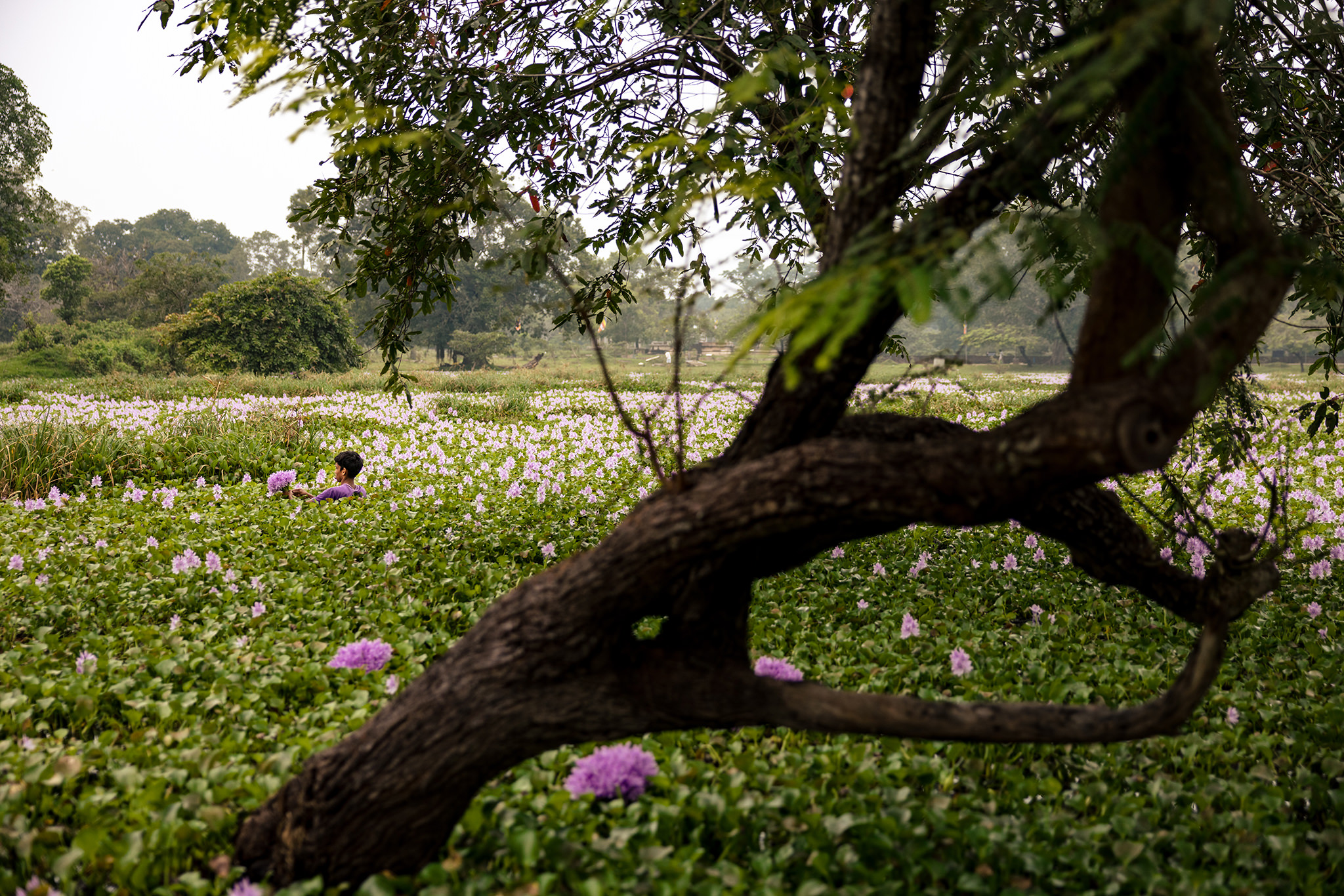
Anuradhapura is one of the country’s ancient capitals and the country’s foremost Buddhist centre. It’s filled with Buddhist history and is known for its temples, which date back to the 3rd century BC. We thoroughly enjoyed walking through Ruwanweli Maha Seya and Thuparamaya temples, but balked at paying $30USD each to visit the Abhayagiriya complex because we honestly didn’t know if we were being scammed or not. We’ve seen many Buddhist temple ruins, but haven’t often visited temples that are so active, making it an enlightening visit that we approached cautiously so as not to offend, since we were diving in without having fully educated ourselves yet. Besides ensuring knees and shoulders are covered, you also have to remove your shoes and hand them over to the “shoe check” booth. It’s an unfamiliar feeling to be walking around outdoors in a populated concrete area without shoes, but I’ll admit that I found the feel of concrete underfoot a subtle reminder of where I was and the significance of it. On our way out, we spotted a young man standing waist-deep in a pond, picking water lillies that are sold in bouquets to be used as offerings at the temple, and I couldn’t help but wonder if he chose his shirt because it perfectly matched the lillies he was collecting.
On our first night in Anuradhapura, we also made the decision to pack an overnight bag the following afternoon (the bonus of paying ¼ of what you expected to for accommodation is that you can double up on rare occasions) and hop on a bus to Wilpattu National Park, the largest park in the country, in the hopes of spotting leopard and sloth bears. I connected with a guide through a Sri Lankan FB travel group and he agreed to travel up from Colombo to Wilpattu to meet us, which was no small commitment – Colombo is easily 6hrs away by bus. We chatted with Ashan over dinner the night before our safari, then called it a day early so as to be ready for our 5am alarm.
During the night, there seemed to be a fair bit of commotion of which I was vaguely aware, but I was still combatting jetlag and slept with headphones in. In the morning, Rich said he heard all kinds of noise and managed to convince himself that it wasn’t actually coming from our room – until he got out of bed and discovered that the source of the commotion actually was in our room. A juvenile land monitor had made its way into our cottage while our doors were open earlier in the afternoon and got locked in with us overnight. We opened the door and bid him a cheerful goodbye when he figured out his escape route.
Our safari day was a full 12hrs of actively searching mostly through extremely dense forest for leopard, sloth bear, sambar deer, spotted deer, and a whole host of birdlife. Some favourites included a diving kingfisher, a peacock roosted on a dead tree, and more crested serpent eagles than we could count. We had two marginally successful leopard sightings and also spotted a sloth bear, but all were in dense brush so rather difficult (if not virtually impossible; check out the photos on Instagram to see just how difficult) to see. It was interesting to see how jammed up the roads got at each sighting; it’s clear that Sri Lanka has some work to do to figure out how to manage the number of vehicles in the parks.
Given that our sightings were tough, it was great that Ashan was such good company because they day passed easily and we enjoyed our time in the bush. At 6pm, we bid Ashan and our lovely driver goodbye at the bus stop as we headed back east to Anuradhapura, arriving in town in time to grab a tuk tuk straight to a local Pakistani restaurant for an incredible meal and then bed.
The following day included a controversial decision: Rich went for a haircut and returned beardless – it’s maybe the second time in about 15 years that he’s been without facial hair. I struggled to look at him without giggling for a full 48hrs afterwards because he looks so different!
That day, we finally sat down with Google Maps and did some planning (keeping my gaze focused on my phone and laptop also helped reduce the amount of giggling at Rich’s bald face). Who knew it was possible for us to book guest houses several stops in advance?! Formulating a clearer plan made us both feel a little more settled and on the same page, which was exactly what was needed. We now had a large stretch of time in the highlands to look forward to after finishing a couple of stops in Sri Lanka’s Culture Triangle.
For lunch, we decided to make our way to Hela Bojun Hala, which is a municipal food court you’ll find in most cities. In some cities, you place your order centrally and go to each vendor to collect your food. At this one, you can tour the counters and order from each vendor as you please. For adventurous eaters, it’s the perfect opportunity to try new foods with minimal risk – it’s always low-cost and items are ordered one at a time rather than as a full meal, so you can go back for more if you like them (like I did with the milk hoppers, which are made with coconut milk in the batter and a little sprinkle of sugar is added after cooking). The great thing about tech now being so accessible is that I could stop at each stall and use the camera feature in Google Translate to convert the Singhala script into words I could recognise. It was far from accurate – half the time, the words were completely nonsensical in the given context, but it was still educational. Rich was comically frustrated that the tea vendor refused to sell him tea (“She has tea – I can SEE it! – but when I asked, she just said, “No!”) I suspect that the tea is made with local water and she knew he couldn’t have it, despite not having the English vocabulary to articulate it, so was saving him some grief later. The water quality is such that we don’t have to worry about washing fruit, questioning the ice used for blended juices or brushing our teeth with the tap water, but we stop short of intentionally consuming any significant amount of water straight out of the tap because it’s just not worth it. We joke that we’ve been micro-dosing on bacteria for years as a way of training our guts for some of the more questionable places we eat, but we’re also not about to intentionally go looking for gastro-intestinal trouble. Yet.
That evening (after more incredible Pakistani tandoori food), we walked through town to go to Green Heart Coffee House on a bit of a whim. We had time to kill, it had good reviews, and we wanted some tea. We sat down and, within about 45 seconds, a young boy poked his face around the corner. What followed was a lighthearted exchange with him and his sister about nearly anything that came to their minds. We learned that Sri Lankans begin studying English in the first grade and, while initially shy to speak to us, they have consistently proven to be proficient and eager. We laughed as the two kids asked if we could take a photo with them, to which I replied, “Yes, but only if we can take a photo, too!”
We enjoyed tea by the reservoir in the morning. The limited seating in that particular café meant that we ended up being joined by an Iranian-American (F)/Indian (M) couple. We got to chatting and ended up having a somewhat strange conversation: the woman talked about how similar South Indian and Sri Lankan people are. She was perplexed that Sri Lankans “refuse to see that they’re the same – but they are!” I wish I’d had the presence of mind to point out how flawed this insistence was in the moment, but I certainly reflected on it plenty of times over the next several days.
We finished our tea and made our way to the bus station, where we made an impulsive decision to take the air conditioned bus to Dambulla – a whopping 750rupees (about $3.50) each – before connecting onto a local bus to Kibissa (200rupees total, for comparison), just outside Sigiriya.
Prior to leaving for Sri Lanka, I told a friend that the tourist routes through Sri Lanka seem more pre-determined than in any other country we’ve ever visited, so I suspected that the key to having a memorable experience was going to be in how we engaged with people we met. Anuradhapura proved this theory to be entirely accurate. Our time there was unhurried and peaceful, and each person we interacted with was both helpful and warm. I’m not sure that you can ask for anything better when starting to get to know somewhere new.
Grateful for: a welcoming smile
Up next: Sigiriya