
Accompanying photos can be found here.
We made the drive from the Sahara back to Marrakesh without incident and proceeded through the airport, feeling content that we’d drawn a line under Morocco: we’d gotten a better appreciation for the country’s culture, seen its multitude of landscapes and had some wonderfully positive interactions.
Our flight to Istanbul went smoothly but, just to reinforce my wariness of the city, we got burned yet again. We left the airport feeling proudly confident of our knowledge of the transit system but, unbeknownst to us, the Metro had closed early that day due to construction, so instead of a cheap train ride we were left with a $70 taxi fare (just under 1/3 of our daily budget) to reach a hotel that we’d chosen specifically for its strategic location on the transit lines.
Arriving as we did in the middle of the night, we were fascinated to see that Istanbul really is a 24-hour city. If we’d wanted to, we could have easily gone for drinks, dinner, and done some shopping. After a huge drive that morning, a 5.5-hour flight, and another hour in transit, I had about as much interest in making any further economic contributions to Türkiye’s GDP as I did in learning how to tack weld. We set our alarm and flopped into bed, mentally preparing for the journey ahead.
Our upcoming 3-week exploration of Türkiye was nothing if not ambitious. We’d made a challenging decision to stick to our tendency to go well off the travelled route, but it was going to come at a cost: instead of indulging our penchant to lean into slow travel, we’d have to opt for a pace more closely described as “breakneck.” During our fabulous Culinary Backstreets tour with Gonca (I’ve said it before and I’ll say it again: make room in your itinerary to do their tours; use code CBTI for 5% off) and using all kinds of delicious details gleaned from conversations with my lovely travel industry colleagues from ITEM Travel, we’d shaped our entire route around savouring the best offerings in Türkiye’s culinary landscape. It wasn’t an itinerary for the faint of heart (or stomach), but it was going to be memorable. As part of our planning, we’d sat down and mapped out all of the transitions between destinations so we were going into the route with a fairly realistic perspective about the length of some of the drives – and there were going to be a few hefty ones.
Our adventure started in the morning with an early route across Istanbul to SAW airport, where we’d pick up the car and drive 8 hours to Samsun, which was not so much a destination as a place to lay our heads for a night.
The route from Istanbul to Samsun was straightforward, but did include one plot twist. On our way along Türkiye’s Black Sea region, I learned that one particular city is famed for its köfte, so of course we had to make a pitstop in Akcaabat for lunch. The city’s specialty is made with beef tallow and they’re producing köfte so tender that you’re left with no choice but to put your coronary conscience aside while you savour each tender mouthful. Our time at Köfteci Ismail Usta included meeting a lovely server who was almost comically charming: he even made sure to turn the salad plate so that the cucumber heart faced me. We used Google Translate to tell our server and our chef (the eponymous Ismail) that we’d detoured to the city specifically to eat at their restaurant and let them know how much we enjoyed their food – an approach that would come to serve us very well over the coming weeks. Turkish cooks are very proud of their food in the same way that Moroccan men are proud of their country and Indians are proud of Hinduism.
That night in Samsun, our first dinner back in Türkiye was great as a way of rebounding after a long day on the road. Rich rightfully rewarded himself for his driving prowess with a gigantic mixed kebab platter to which I added a grilled eggplant kebab plate so that there was some token vegetable content (but it came stuffed with meat, of course). We looked on uncertainly as multiple additional plates were added to our table: bread, vegetables, salad (will I ever tire of vinaigrette topped with sumac? I certainly hope not)…. and lumpy pink rolls that looked like meatballs tucked under a blanket of lettuce. When we did a quick search, our newfound translation of “Çiğ köfte” (“chee kyuftuh”) was “raw beef.”
We exchanged looks about whether it was really a good idea to eat raw beef the night before another very long day of driving.
With exactly the same level of caution that we’d had the rest of the trip thus far (that is, a somewhat dangerous absence of any whatsoever), we tucked in anyway. What a delight! These delicious köfte are highly-seasoned, tomatoey bulghur “meatballs,” eaten with a squeeze of lemon and wrapped in lettuce. It turns out that Turks also recognise that it’s challenging for them to serve raw beef safely, so while this köfte was traditionally made from raw beef, it has gradually been replaced in almost all restaurants by beefy-looking bulghur.
As with our first night in Istanbul, we weren’t entirely sure who would be footing the bill for the extras, but decided we’d figure that part out when the time came. We dove into each dish and enjoyed flavours both new and familiar. Rich’s platter included cubes of grilled liver and it was actually pretty good as far as one of us was concerned. It was especially meaty; I would have believed it was beef except for a noticeably stronger offal flavour in my last bite. Nothing like finishing strong – or wrong! Seeing that every table included all of the extras and the bill included none, we began to understand that Turkish dining was organised a little differently: the price per dish was a little higher than other places we’d visited, but there were always items that were included as part of that price.
On the way home, we discovered that our plan for groceries was clearly going to have to wait. We’d traded the 24-hour shopping of Istanbul and moved into regional Türkiye, which apparently shuts down at 8 or 9pm. We walked slowly back to our comfortable hotel with its comically large room and didn’t need rocking to get to sleep. Next up: another 7hrs of driving to reach Rize.
When looking for somewhere to stay around Rize, I unintentionally negotiated our way into a super cute A-frame cabin that we definitely couldn’t originally afford to rent and then couldn’t afford not to rent in Çamlıhemşin, a district on the Ayder Plateau, which I had heard likened to Switzerland with its views out to the Kaçkar Mountains. It was cute, comfortable, and well-located, being just 30 minutes from both sea and mountains. I’d heard the area was great for hiking, so we were looking forward to the unusual opportunity to enjoy fresh seafood and great mountain trails all in the same place.
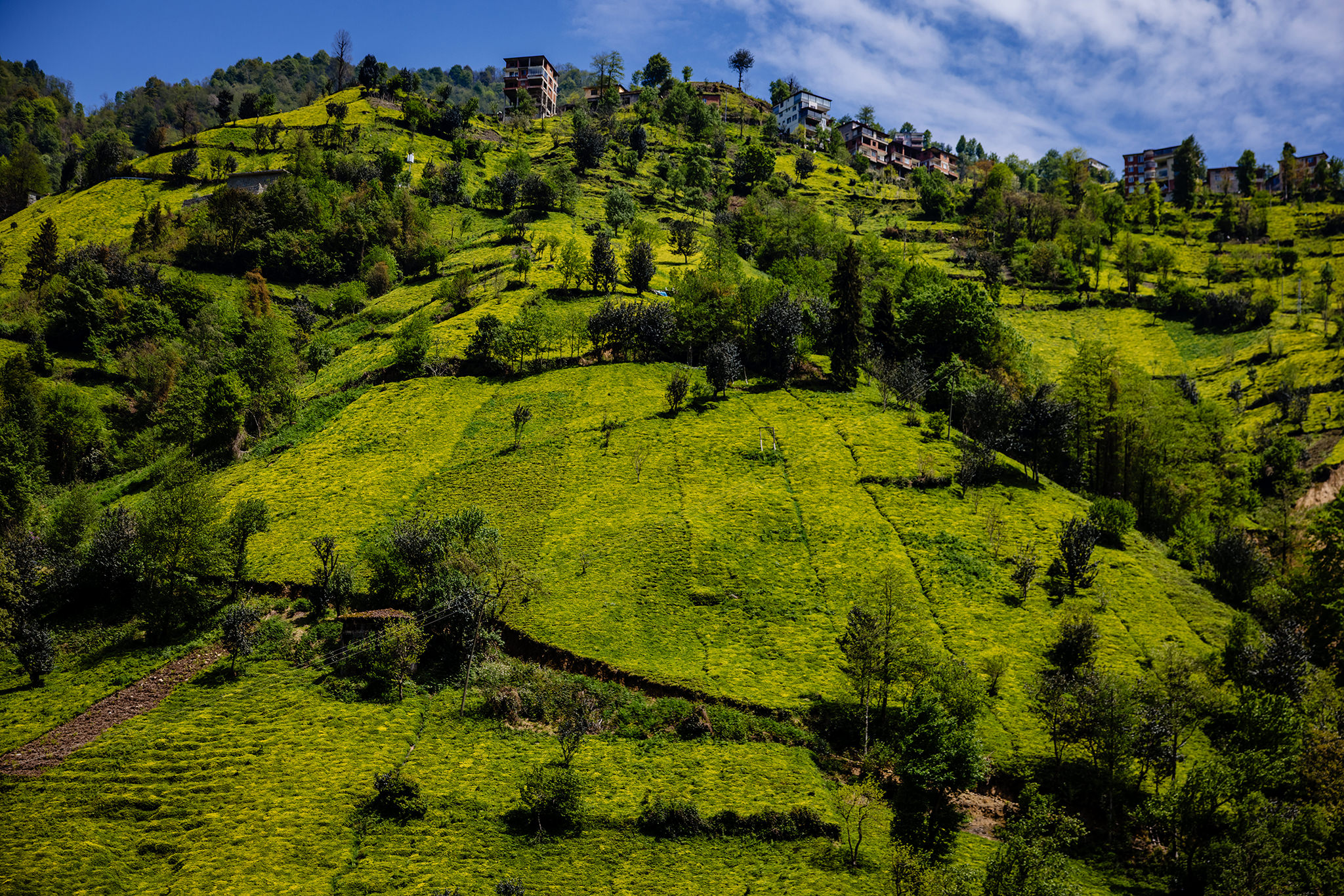
The whole area around Ayder is a series of plateaus or “yaylas” and almost every available square metre is planted with tea, which made for spectacular scenery. For context, the plateaus around Rize grow the vast majority of the tea in a country whose obsession with the drink makes England look positively amateur. While Sri Lanka’s highlands had left us agape at the richness of colour and depth of texture, these yaylas were introducing us a whole new combination of features. From Çamlıhemşin district, we had views of snow-capped mountains, the Black Sea, and all of the depth that comes from having countless individual tea-blanketed ridges weaving through the landscape.
One would think, then, that such terrain would also include hiking trails. One would be horribly mistaken. Off-season was perfect timing for crowds (of which there were none), but terrible timing for hiking (of which there was also none). On our first morning, we headed out to find a trail and proceeded to bicker our way through an exploratory walk because Rich wanted to run and I refused; the terrain map showed it would be one neverending incline and that was a hard “pass” for me that day. The argument ended with the discovery of 8-foot high snowbanks and, a short while later, the discovery of a lone set of very large bear tracks. Not only could we not find any sign of the existence of a trail, we definitely no longer wanted to find the existence of a trail. We explored some hills, marvelled at an unusually remote bullring, and called it a day.
The trails must’ve been buried under the snow on the ski hill (heli-skiing is a popular attraction in the area) because, after two days of searching, the only trail we found ran out at a washed out bridge a mere kilometre after it started. What we saw and the looks we got while walking certainly led us to believe that Turks just don’t hike in this region.
Accepting our destiny to travel by four wheels instead of four feet, we (and I use “we” quite loosely here) chose to do some mildly terrifying mountain driving that ignited my previously-undiscovered PTSD when I realized that the sound of anything skidding on gravel immediately caused me to think that someone (read: us) was tumbling over the ledge lying seemingly mere inches from our tires. While Rich gleefully zipped around switchbacks, I white-knuckled my way through self-talk to remind myself that no one was in danger and tried to enjoy the scenery. Sounds positively joyous, right?
During our nausea-inducing tour of the high ridges around Ardesen, we bumped into a local man who gave us a tour of his brand new property. It was incredibly random (he spoke no English and we no Turkish) but he was friendly and very proud of his project. If anyone is looking for an investment property in the hills facing the Black Sea, we know just the man for you. 😉
After abandoning hopes of hiking the ridges, we settled for a run along the seafront and lunch at a lovely little fish restaurant further east along the coast that had been recommended to us by a helpful man who was sitting outside a shop in Ayder. I had a trio of little fried fish and wasn’t sure if I was meant to eat the bones, heads, and tails so left tiny little cartoonish carcasses in my wake as I worked my way through the delicious platter. On our way back to our cabin, we stopped and had a little walk through – or more accurately “along” – Ayder, which is an unusual one-road village made entirely of tourist shops in the middle of the mountains. Turks don’t seem to like hiking, but they do love shopping and being in and around the snow!
In hindsight, we realised that early-May isn’t the best time to visit the Black Sea if you want an active holiday, but the scenery was absolutely (or, at least, mostly) worth the PTSD flashbacks.
Next stop: Erzurum
Grateful for: the ability to (mostly) internalize my shrieking