
**As always, supporting photos will appear here.
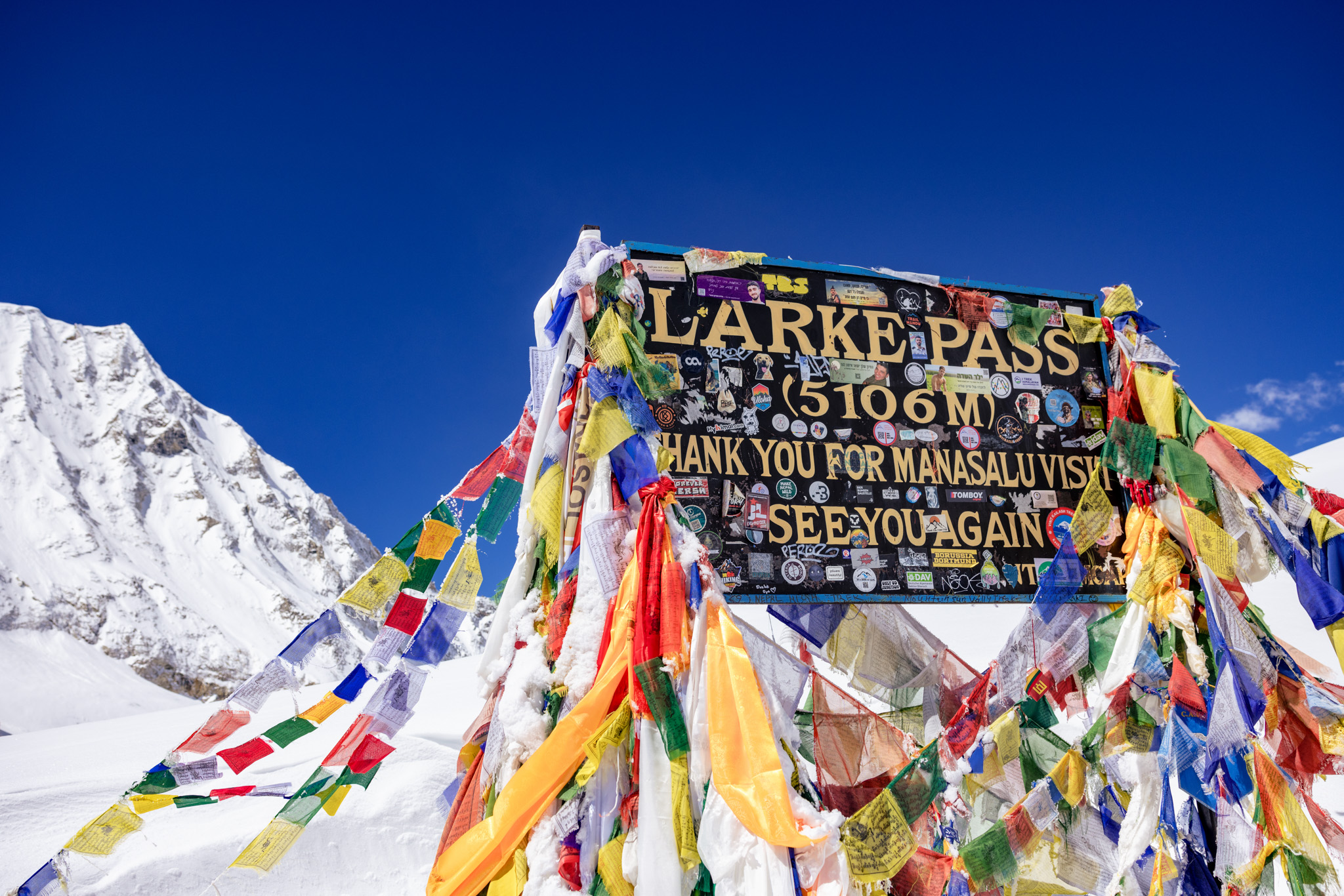
The Manaslu Circuit typically takes 11-14 days, depending on the pace you choose to set and whether or not you choose to add on any side treks such as Tsum Valley. Our plan was moderate: 12 days total, two of which would be spent driving, and two of which would be spent as active rest and acclimatisation days along our route in preparation for the days we’d spend hiking up to 5160m.
I did a fair bit of reading ahead of our trek to try to mentally prepare myself for some of the details (what to pack, how to manage personal hygiene, temperatures), but even so, I didn’t manage to find the info I was looking for. Here’s some info I would’ve found useful during our planning stage. Keep in mind that our hike was the final 12 days of March and we experienced unseasonably late heavy snowfall/accumulation the day before/of the pass-crossing.
Meals & Extras
All meals and a hot drink each morning were included in our package, which is part of where some of the variability happens. You can save some money by paying for your meals a la carte as you go, but our budget isn’t that tight this year (might’ve been able to save $50 over the course of the whole trip?). Hot showers, wifi and possibly heating would be charged individually as needed at the higher altitude lodges. We banked on two hot showers each (hooray for baby wipe showers!) and resolved to be without wifi for most of the time once it started being a charge.
Breakfast was usually my favourite meal of the day. I was a huge fan of set breakfasts, which typically included Tibetan bread (think Indigenous fry bread) with jam, soup or a salad (curious), a pancake or other form of starch, and two boiled eggs, which I’d use as pocket warmers and eat later on in the morning when I was ready for a “booster egg” (eggs at higher elevations make me gassy, so I joked that they were my jetpack). As the mornings got colder, we took to enjoying hot milk porridge with apples, and Rich enjoyed an apple pancake on a couple of occasions. Tibetan tea, a milder version of Indian chai, was always our breakfast drink of choice.
On full trekking days, we ate dal bhat for lunch (dal = lentil; bhat = steamed rice): lentil stew, rice, vegetable curry, a chutney of some variety, usually a protein choice of either chicken or egg, and a small pappadum, and you can get second helpings of any of the starch and veg. It’s a hearty and nutritious staple of the Nepali diet, leading to the saying, “Dal bhat power, 24 hours.” Some people love it; Rich and I both fell in the ambivalent camp, but we decided it was a good solution on days when we’d be trekking all day.
On days when we reached our evening teahouse in time to eat both lunch and dinner, we’d usually get a little more adventurous and opt for some combination of chicken and veg noodles, potato rosti, a noodle soup or momos.
Costs
The total rate for our core trek package (excluding the extra listed below) was $2100USD for two people. We broke our budget down by day because that’s what worked for us, but you can do the math and modify it based on this being a 12-day budget.
**Trek: $238CAD/day for two people included rental poles, sleeping bags and a duffel bag for our stuff were also included in our trekking fees, along with all permits, a private Jeep to Machhokhola, a shared Jeep to Besisahar at the end of the trek, a bus ticket onward to Pokhara, and Mani and Maji’s fees
**Tips: Mani and Maji were extremely well-deserving and tips were given in addition to this, coming to $34CAD/day. Guides seem to be almost chameleon-like in their ability to get along with most guests, but “my boys” worked damn hard during the day and our evenings spent with them made the trip experience that much better.
**Insurance: $172 (total) for the days we were above 3000m. We paid for an annual policy prior to leaving home, but trekking is only covered up to 3000m, so an additional policy was needed. You have to submit proof of insurance as part of applying for your permits. This move was a little tricky – given our experience, I’d probably add more buffer onto the coverage window in case you get stuck in bad weather.
**Gear and snacks: $14/day – this is highly variable depending on whether you arrive in Kathmandu with everything you need and whether you’re really #initforthesnacks. We bought gaiters and microspikes I’m glad we did, even though we only needed them for a day; if you’re trekking later in the season you won’t need either (as long as you pack waterproof pants). At least some snacks are essential to support your energy burn on the day you cross Larkye Pass but you should also be considering some higher carb snacks for any day when you’re hiking more than 4-5hrs. As Rich learned: don’t pack chocolate unless you want to lick it off your belongings. The sun is strong and it WILL melt.
**Luxuries: $11/day covered 3 hot showers, wifi on a couple of days and extra drinks. Beer was expensive and I’m glad Rich agreed that it was not a requirement once prices jumped above $9.25 because that was a little hard to stomach (alcohol is a bad idea at high elevations, anyway, when hydration becomes very important). Tea prices increased dramatically as we went (generally in proportion to altitude) but we agreed on its value, since a steaming hot Thermos of ginger lemon tea was the one thing that brought us both the most comfort at the end of a trekking day. It was also the largest added expense, since cost up to $13 for a Thermos (about 2-3 cups of tea each). We’ve long joked that Rich is a high maintenance travel partner as far as beverages go, so there’s certainly room to save money here if you can forego beer and celebratory rum – although, that rum was absolutely worth it!
Lodging
Our accommodation varied from rows of adjoining rooms (like a mini motel) to individual cottages. Every stay except Deng and Dharamsala included rooms with a private bathroom, which was unexpected; we also never had to share a room with other trekkers, which was also unexpected – a sign that we definitely reaped the benefit of tourism being significantly impacted by the war and resulting flight interruptions because the night before crossing the pass is explained as shared accommodation right from the start of the booking enquiry. There was never heat in the rooms, but Rich kicks off a tremendous amount of heat, so I basically brought along a portable heater on legs. We only needed sleeping bags for two nights of the trek during a period when there was unseasonably late snowfall and accumulation. Teahouse dining rooms were sometimes heated with a central woodstove, but the dining room in Dharamsala (highest teahouse) relied entirely on body heat. Be prepared to get friendly with your table neighbours if you want to be warm!
Toilets varied between squat and Western. Our opinions on the merits of a squat toilet differ according to squatting ability and the frequency with which the user’s backside has to touch the toilet seat. I can assure you that nothing jars you awake at 2am quite like touching the backs of your thighs to freezing cold plastic. I’ll take a squat toilet at high elevation on a mountain just about any day. As you get to teahouses at higher elevations, expect to hear a plasticky “thunk” when you dip the pail in the drum to get water to flush the toilet – frozen pipes are a common occurrence, especially in the morning.
Everything at high elevation takes longer, with the exception of the speed at which your bladder functions. Thankfully, the shared toilets in Dharamsala were neither too far nor uphill from the rooms, so we didn’t have to deal with any critical races between bathroom timing and lung capacity. High altitudes result in lower blood oxygen levels and shorter sleep periods, so everyone got to experience the joys of having to haul themselves out of a blissfully warm sleeping bag and shivering whilst adding all of the extra layers necessary to head out in a snowstorm for a midnight bladder release.
The standard of room in each teahouse varies from rooms with private baths to dorms and shared bathrooms. In the same village, some lodges will have hot water and others won’t. If it really matters, then you need to discuss the details as part of booking your package – we overheard one trekker early in our journey (and his) who had clearly been caught by surprise by accommodation that fell below expectations.
Packing & Hygiene
Each porter can be shared by up to two people and is restricted to a max load of 22kgs. Don’t push it – they’re human. One couple on our route hired a porter and then proceeded to carry as much of their own stuff as they could, which also feels a little unnecessarily difficult, given that you’re paying someone.
My packing list was as follows:
*Underwear: 5prs underwear; 2 sports bras; 4prs merino ankle socks; 1pr thick wool socks for evenings
*Base: 1pr thermal leggings; 2 long sleeve thermal tops 2prs leggings (1 thermal base; 1 regular for evenings)
*Tops: 2 t-shirts; 1 tank top
*Bottoms: 2prs pants (1 hiking; 1 for evenings); 1pr shorts
*Outer: 1 fleece; 1 down jacket; 1 wind/waterproof coat
*Headwear: ball cap, touque, buff and headband (all of which I used at various points!)
*Footwear: Sturdy, deep-lug, waterproof footwear – Rich used hiking boots; I used Gore-Tex trail runners; 1 extra pair of sturdy runners that can be used in the lodges and for lower-altitude hiking OR a pair of comfy shoes for in the lodges
*General gear: Head torch (necessary for crossing the pass); trekking poles; 2L water capacity (see note below)
*Seasonal gear: Gaiters, microspikes, lightweight gloves
*Toiletries: toothbrush and paste, iodine tabs* (see note below), bar soap (bonus if you can use it as shampoo), deodorant, baby wipes, high-SPF sunscreen, blister plasters, self-adhesive bandage, nail clippers, ibuprofen, rehydration salts
*Personal items: I packed my journal, a book, cards, and my camera, along with spare batteries and charger (in the end, I could’ve done the trek with one battery and a charger, but there’s no way I was taking chances of running out of battery power!); Rich packed his iPad for reading and we watched downloaded shows on a few evenings. My book was mostly a waste of time; there are no lamps and a headtorch is an awfully bright reading aid, so it went untouched for two weeks.
Consider your soap/shampoo choice. Will it rinse off well in cold water or will it take so long that you’ll sound like you’re starting your opera career while you scrub at yourself under a subzero shower?
The iodine tablets (30mins purifying time) worked fine for us, but in hindsight, we would’ve made good use of a water bottle or bladder with a built-in filter. While we each had nearly 2L of carrying capacity, we really only needed 1L because it’s easy to refill from teahouses along the way, which would save an extra kilogram of pack weight.
Layers will be your best friend. Duh. It’s still hard to wrap your head around what this will look like, though. Despite overnight lows that quickly hit -10C, we wore (or wished we wore) shorts any day that the sun was shining. “Be bold, start cold” worked pretty well for us (with the occasional costume change happening behind a rock), but not for everyone. Rich wished he had one more top layer. I would’ve happily worn a combo of windproof/down vest/compression sleeves instead of a full coat the morning we crossed the pass because my core is always hot and I didn’t need the coverage on my arms.
If you’re not a fan of shockingly cold undercarriage “showers” after using the toilet, it’s important to bring toilet paper – three rolls is plenty for a mixed gender couple with “regular” functions. If you’re taking Diamox, be aware that you’ll be playing a game of Side Effect Bingo, which can impact your guts and leaving you scrambling for the toilet with more frequency.
If you’re someone who menstruates, consider your options carefully: if you’re on hormonal birth control, the easiest option for those who are able is use consecutive packs and skip a cycle. Otherwise, you need to consider “leave no trace” principles and an absence of good (or sometimes any) garbage disposal. A menstrual cup would work; just bring your own soap and water with you to each toilet in case of lacklustre facilities and consider whether you’re comfortable emptying your cup if you have to use a “mountain toilet” (ie a bush/rock/sharp turn in the trail).
Questions I Wish We’d Asked
The great thing about trekking agencies in Kathmandu is that they’re extraordinarily accustomed to people doing the rounds as part of doing their research – expect soft sells and ready sharing of info. However, they’re so accustomed to a standardised circuit that the most critical question is simply: “Is there a different route through the circuit that we should possibly consider?”
If you’re accustomed to high elevations or a particularly strong hiker, you can do the circuit in reverse (uncommon, but possible). You can modify the distances you trek each day and stay in different villages than the typical route. You can add side quests like they’re Super Mario bonus levels. You can also string different hikes together to create a mega-hike, if you really want to.
The one thing I wouldn’t suggest doing unless you’re firmly restricted by schedules is shorten the hike. The whole point is to take your time and get a chance to see the villages you’re passing through and staying in; rushing the route takes some of that away. There are monasteries, base camps, other villages and valleys that you can visit if you have extra days. For us, 12 days was exactly right and sticking to the regular route worked well as far as forming friendships that would come to be especially valued as we reunited with a dozen friendly faces atop the pass.
Things to Know
**Do you need to save your knees? If yes, take the road for the first day; otherwise, make sure your guide knows that you want to be away from the road every chance possible – the route is far more scenic and dramatically less dusty. The day you climb the pass includes what many consider to be a punishing descent. If you’re not sure whether your knees are fully prepared for this, do what you can to spare them some strain in the earlier part of the trek.
**The road to and through Machhakhola is being extended (much like the development that has happened in Annapurna), so in coming years the trek will either be shortened since you can start further along the trail or you’ll be walking along a road with vehicle traffic. Ask questions about where the road is so that you have up to date info.
**Ask for daily distances in kilometres instead of hours, since there’s a big different in time depending on your pace. We sat perhaps in the front third of the pack tackling the trek with us; if you like to stop often or, conversely, if you’re typically a power hiker, your timing for arrival at camp (and, therefore, sometimes your ability to secure comfortable accommodation) can vary wildly.
**There’s a big difference in pace at 1600m, 3200m and 5000m. Mentally prepare yourself for this and accept that slow is ideal the higher you get.
**There’s a beautiful acclimatisation day hike from Samdo to Tibet, but it’s 20kms round-trip. It’s incredibly steep and, if hiking in inclement weather, the footing can be very challenging with snow/mud. Consider your rest day needs carefully and be mindful about turning back when you’ve accomplished what you need to as far as “climb high, sleep low” principles.
**High altitude sun is no joke – pack very high SPF sunscreen and apply frequently, particularly to your lips and ears. Rich demonstrated that it’s possible to sunburn the inner parts of your ear; I woke up the day after our attempted hike to Tibet looking like I’d had a burning desire to get some medical aesthetics work done and join the Jenners (I called myself Kandy for the morning).
**Bringing fully broken-in shoes/boots is essential. You’re going to trek about 150kms in 10 days. Blisters will destroy your experience, not just your feet.
**Top tip: take a photo of each of your teahouse rooms and each dining room to help when it’s time to refresh your memory months (or years!) down the road.
**Self-adhesive bandage can double as a compression bandage. Ask me how I know.