
**As always, you’ll find accompanying photos for this post here.
Our bus journey to the coast was simpler this time around – a couple of seats on a mostly-empty bus meant we had room to spread out and read our books. We’d booked a room at Sea Wind Homestay a little outside of the city of Kannur, which is on northern Kerala’s coast. We’d hesitated when booking because we’d traded the houseboat of Alleppey for Kannur, but Sea Wind sat in a funny isolated little nook a little south of the city, rather than in the backwaters to the north, so we knew it might not end up accomplishing what we thought it would. When we got off the bus on the side of a highway, were thrilled when the owner unexpectedly met us and loaded us into an auto, which he then led down the hilly trails to the guesthouse. Thank heavens he did – we would’ve struggled to direct a driver on our own!
As we settled in, I caught a glimpse of my arm in the mirror and knew I was in trouble: bed bugs had struck once again. The bites lined up exactly where my elbow and side had rested against the blanket on my bus seat. I’m just that lucky, I guess.
Antihistamine cream in tow, we made our way to the beach for sunset and hoped that we might find somewhere on the sand that was doing dinner, since we found out we couldn’t get anything to eat at our homestay and, as we suspected, there were no restaurants anywhere nearby. The walk to the beach ended up being more of an adventure than we anticipated, but we bushwhacked our way to the sand in the growing darkness while we each silently wondered what terrain India’s myriad poisonous snakes preferred and desperately hoped they didn’t like lush, leafy paths near beaches.
We stopped in at a guesthouse by the water and were disheartened to find out they don’t do meals for non-guests, but when the owner found out why we were asking, she immediately called to one of her staff and made sure we could eat. We chatted with an older British couple while eating just enough to make sure we’d make it until breakfast while not causing any guests to go hungry, then thanked our host profusely and headed on our way, once again marvelling at Indian hospitality.
One of the unique aspects of life in the Malabar (northern Kerala) region is the theyyam ritual. These rituals involve “possession dancers” invoking various deities into their bodies to carry out the blessings of the priest and the temple, purifying it for the coming year. The ritual appears extraordinarily theatrical to outsiders, but it’s far from a performance: they’re considered to be a vital part of the spiritual and physical wellbeing of the community and attendees believe them to be supernatural events that ensure successful harvest, good health, and a prosperous year for the community. Theyyam are performed at various Hindu temples throughout the region and at different times of day; however, the most exuberant versions seem to take place at night.
Thanks to a fellow homestay guest going the previous night, we got connected with Jithin, a local driver who is passionate about introducing visitors to theyyam. He agreed to take us on our second night in Kannur, so we were at the gate and ready to go at 2:45am. Along with two other travellers, we took our seats on the concrete steps. The drumming had already started and the ritual was clearly already under way; an elaborately dressed dancer made his way down the steps right beside us and out into the temple’s courtyard.
The theyyam we witnessed centred around the stories of Gulikan and Kuttichattan. Gulikan was a being created by Shiva to defeat Yama, who is responsible for death. Defeating death created an imbalance in the universe, so Gulikan’s role was modified to being that of both protector and punisher. Kuttichattan was an intelligent but mischievous son of Shiva and Parvati, who was gifted to a childless family. After acting in defiance, committing violence, being dismembered and burned, he emerged from the fire and went on a rampage of destruction. He was deified as a way of restoring peace, and is worshipped for his power and protection.
It was fascinating to see how the possession dancers conveyed the spirit of the deities through their actions: how Gulikan’s 20ft tall head dress shook and swayed as he marched on stilts and defeated death and how he was able to slam the headdress to the ground as he then became a protector; how the belly-shaking mirth and mischievousness of Kuttichattan turned into menace and destruction before he emerged from the fire and was celebrated as a protector.
The ritual was a unique combination of gravity of ceremony mixed with real life: the drum beats and grandeur of the visuals kept my attention, but it was impossible not to smile when I looked around at about 5am, just before the fires were lit, and noticed that half the attendees were napping in their seats.
As Kuttichattan was adorned with grass-tipped poles soaked in oil, it was impossible not to feel the electric charge of the event. The tension increased until the poles were alight, at which point the ritual began to feel like a scene from Lord of the Flies. Villagers crowded around Kuttichattan and reveled in the destruction, before cheering his emergence from the blaze as Protector and dancing alongside him in celebration, just as the rising sun began to tint the sky pink.
We walked back to the car with Jithin and arrived at our guesthouse shortly after 7, drum beats still echoing in our ears and ready for a good snooze before breakfast.
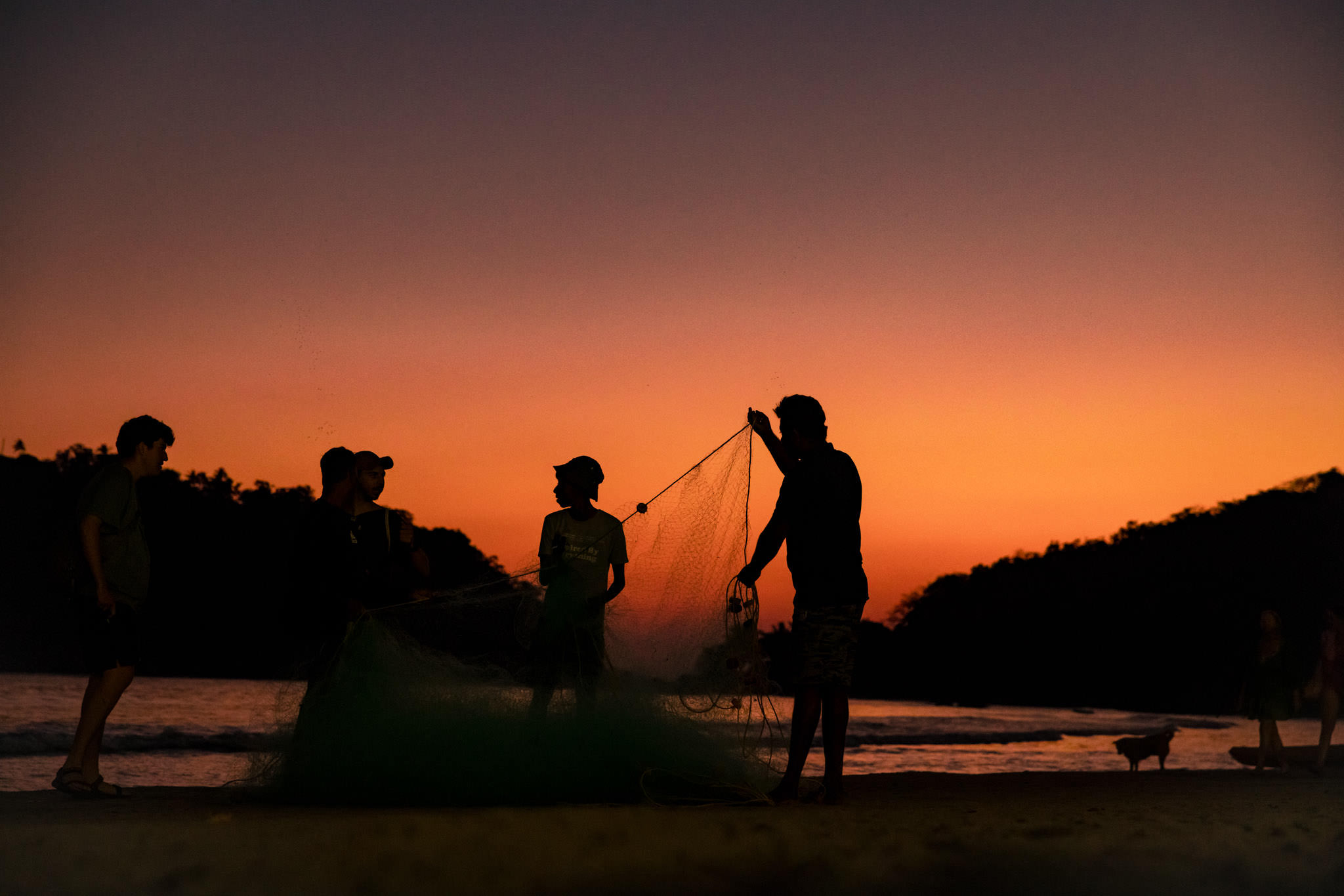
Aside from the spectacle of theyyam, our four nights at Sea Wind generally passed in a haze of amazing home-cooked breakfasts and dinners; time on the terrace with books, journals and blog posts; a few runs and efforts to explore the surrounding hills; and time on the beach. As we made our way through the palms and onto the sand each day, I marvelled aloud that I would never have believed we’d find a beach so spotless and deserted.
On our way to the local bakery one day, we recognised an auto driver lounging in the back of his rickshaw and gave one another an enthusiastic greeting. We already knew he had a great sense of humour (he’d been trying to tickle Rich at the theyyam and, when Rich poked him back, he squealed like a certain white-suited dough man and burst into giggles), so when we saw he was still there on our way back, I walked quietly up alongside his rickshaw before jumping out suddenly alongside him. He jump-scared so badly I think he had an advanced meeting with next year’s theyyam deities, but we could hear him giggling as we laughed our way back down the village lanes.
We had misjudged our timing in Kannur, so spent one extra night at a hotel in Kannur city, thinking it would be great to explore town for a day before catching the train north to Goa. Spoiler alert: it wasn’t. There must’ve been a few decent things to the north of town because we did see several Westerners who arrived via minibus, but even they spent the remainder of their day by the pool. The draw of Kannur itself remains a mystery, but the calm of the northern beaches was well worth getting acquainted with.
The train from Kannur to Karwar was a bit of a mistake. We booked it before exploring accommodation in Polem, a village at the extreme south of Goa known to be very quiet – only to discover there wasn’t any accommodation in Polem. We got accommodation sorted in Palolem, then next-nearest option, but it was almost an hour from Karwar by taxi and included a state border crossing, so we got stung with a (relatively) huge cab fare to get there.
We were booked in a 3rd class AC carriage, and Rich was assigned the top bunk on a stack of three, while I was assigned the top bunk of the side berth – only two beds high. It’s virtually impossible for someone of Rich’s size and limited flexibility to fit on the top bunk (but, remarkably, wasn’t impossible for the 81 year old British man also travelling in our cabin!), so we promptly switched beds and a tried to keep my cackling to a minimum as I navigated the challenges of being positioned 18” from the roof of a rail car. One very cool detail that I discovered about Indian train travel: they have an app tied directly to the rail system that allows you to order food directly to your carriage at various stops along your journey. It’s more expensive than what’s offered onboard, but we enjoyed a really great dal fry in the cramped quarters of Rich’s bunk. I used the rest of my time in my bunk to get some culling done, which was helpful after taking so many photos at the theyyam, but (perhaps needless to say) I was pretty happy when it was time to get off.
When we finally arrived in Palolem, we were greeted by scenes that felt eerily similar to Tangalle’s beachfront: a maze of small guesthouses, restaurants and bars with motorbikes parked haphazardly out front, all touting business to tourists. The best thing it had going for it was that it was small – really only one winding main street, broken in half and interrupted by a bit of wild terrain.
Oh, and cows. EVERYWHERE.
Over the course of 4 days, we got used to Palolem traffic jams: some combination of pedestrians, cows, buses, dogs, motos and cars typically all trying to navigate the same tiny intersection at the same time. My favourite was when we spotted a cow with its front hooves up on the first few steps of a bar. The name of the bar? Bear Bull. I kid you not.
We stayed at Shawnel’s Beach Resort, which was perfect for us: only a few minutes’ walk from the beach, lots of leafy garden around us, room to hang laundry, and so blissfully quiet that we could sleep without hearing town noise. We moved up the beach for two nights at the end of our stay because we were shifting plans to match up with available trains, and were happy to discover that the north end of the beach gave low-tide access to a whole separate section of rocky coast that was fun to explore.
Popular with British retirees, Palolem has a seemingly large expat community for such a small town. It’s really just a beach retreat with yoga classes for those who wish to partake (we did not); uncommonly cheap liquor for those who wish to partake (and it appears that many do); and decent roads on which to run (which I made use of while Rich was out of commission for a few days). While out for a run one morning, I had a rather exciting encounter with an extremely poisonous and none-too-friendly Russell’s viper, happily curled up on the side of the main street, but our time otherwise passed in a peaceful blur. We chilled out on beach beds, swam in the incredibly warm (82F!) Arabian Sea, enjoyed a sunset cocktail every day while we placed bets on how many selfie sessions we’d see, and otherwise laid very low until it was time to board the train for the 21hr journey to Ahmedabad. We were happy to have seen a little pocket of Goa, but also ready to bid it a fond farewell when it was time.
Grateful for: sunscreen, our phone alarm clock