
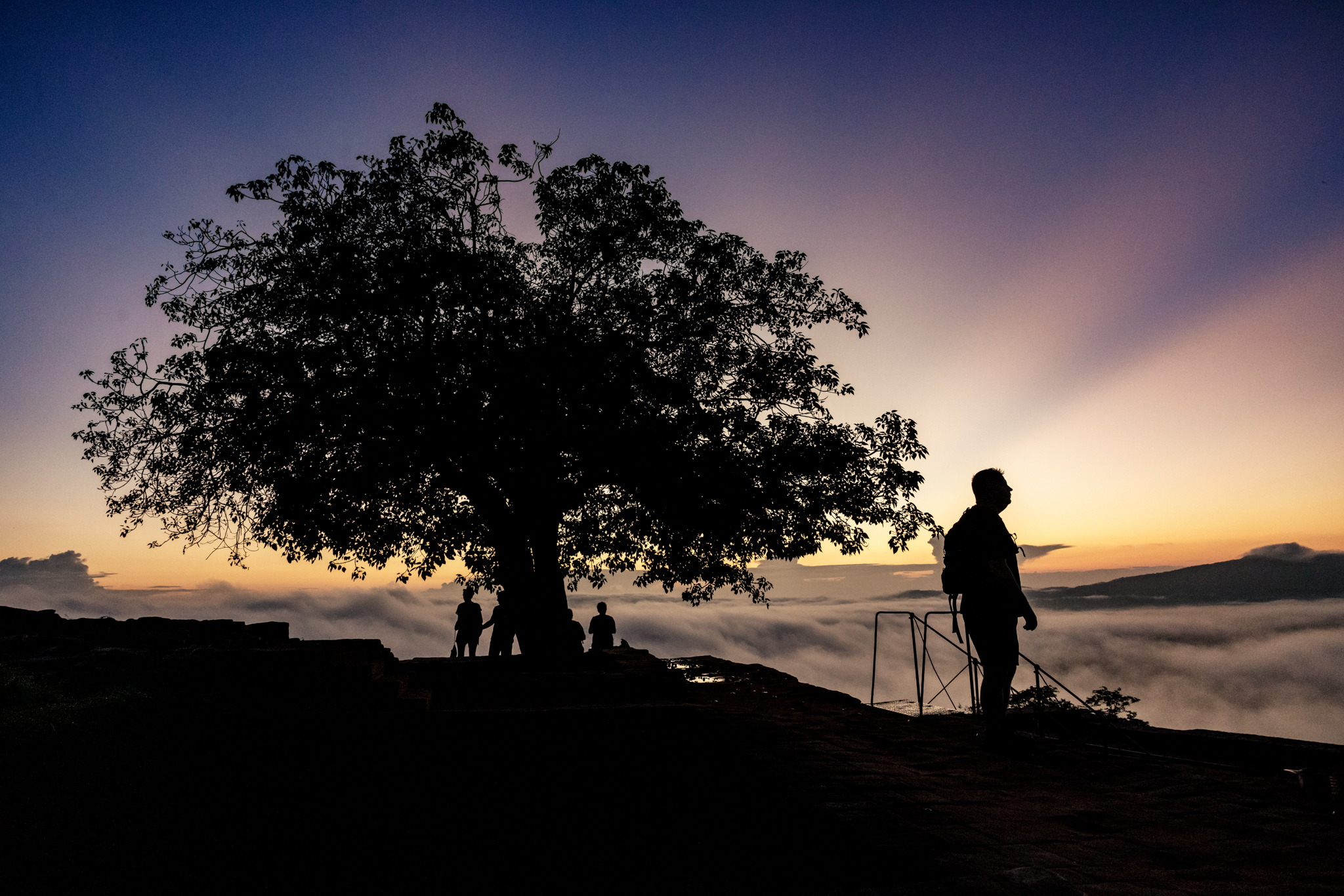
**A note: blog posts will have a dual-media format. For accompanying photos, head to my Instagram account. Everyday trip happenings also get added to my stories there.
Setting off on a major trip is both exciting and overwhelming in the first few weeks, and our start in Sri Lanka has been no different. While I’m eager to explore new destinations, I also find myself anxious to settle into new routines – but how do I do that when nothing is routine?
Prior to leaving for our (almost) year-long sabbatical, the most common refrain Rich and I heard when talking about the trip was, “I don’t even know how you go about planning all that!” Our reply is relatively simple: we don’t. We’re the sort that choose a general route, book a few nights of accommodation so that we have somewhere to land and find our feet, and try to get an idea of which flights are going to be mission-critical. The rest is then left to chance, opportunity and time.
There are, however, a few key items on our to do list each time we arrive somewhere new. I thought it might be useful to share these because it’ll likely give some insight and context for what’s to come this year.
Here’s our shortlist of details that help us settle in:
- Personal safety: where do local residents carry their valuables – on their back? front? in pockets? not at all? The location of their bags and belongings gives us an immediate idea of what we need to be aware of as far as personal safety. If phones are never visible or bags are carried where owners can always see them, we move around with more caution. Sri Lanka is predominantly Buddhist, and we’ve learned over time that this typically means we’re much safer than in other countries – no one wants bad karma.
- Neighourhood safety: how are individual properties divided – fences? walls? If there are walls, what are they topped with? Open yards or wire fences are good indicators of safe places. Broken glass protruding from the tops of walls tells us that we’ll want to be mindful of locking doors and keeping valuables out of sight from windows. If we don’t ever see locals walking at night, we take note of that, too. It turns out that elephants, not people, are the going cause for concern in parts of Sri Lanka, so we’re taking tuk tuks at night in the northern central region but have otherwise been perfectly safe walking (when the heat permits it).
- Money: Do people go to ATMs alone? Are the banks guarded? Do you ever see cash in hands? Do you ever see people at ATMs at night? Which of our cards work? Which banks charge fees and which don’t? What are the daily withdrawal limits?
- Phones & Internet: Can we get a local SIM or are we going to rely on an eSIM? Is the internet reliable or do we need to give our moms (hi, Mom!) a heads up that periodic radio silence doesn’t mean we’ve fallen off a cliff?
- Garbage: Where do plastic bottles go – in the garbage, beside the garbage (for people to collect and return/recycle) or in a separate container altogether? What’s the garbage disposal infrastructure?
- Daily routine: What time do residents get moving in the morning? What happens for breakfast? When – and, most importantly for people like us who like to try as many new foods as possible, WHERE – do they eat dinner?
- Laundry: We brought a drybag and clothesline on this trip so that we’re better able to do sink laundry, but we also pay attention to which towns have laundry services and whether the climate will match with our timeline as far as getting clothes dry in time.
- Relationships: Are people genuinely helpful or are they working their way up to selling you something? After spending time in places where tourists are often taken advantage of, we’ve been caught off-guard by how honest and genuinely helpful Sri Lankans are.
- Transportation: Do locals use Uber or another app for ride hailing (in Sri Lanka it’s Pick Me)? Can we safely grab a taxi/tuk tuk from the roadside? Do we need to book buses and trains in advance or on the day of travel? How far off schedule do they tend to run? We’ve had travel days in Southeast Asia that should’ve been 4-6hrs and ended up being well over 10, so having our first “long distance” (140kms) bus journey run a full hour faster than Google had suggested it would was a pleasant surprise. Buses here are crowded, hot and chaotic (you jump on and off on the fly; sometimes they barely come to a complete stop), and we seem to consistently pay for an extra ticket when we’re travelling with our full complement of backpacks, but that seems pretty fair – we take up an awful lot more room than two Sri Lankans!
The objective of the game is to figure all of this out as quickly as possible because we have to repeat many parts of the process in each new location, so that faster we get at it, the more efficiently we get to move on to the fun stuff – like lunch.
And so, with all of that in mind, away we go on this adventure!